© 2024–2026 Course Correction Consulting Ltd. All rights reserved. LEAD with EASE™ for Organisational Judgement is James Hardie’s distinctive double mnemonic and applied model, developed in April 2025 and first published on 23 July 2025.
.svg)
.svg)


Leadership creates the conditions. Teams turn them into capability.
LEAD with EASE™ for Organisational Judgement is my double mnemonic for improving how leaders change their posture and how organisations build the conditions for sound judgement. I developed the model in April 2025 and first published it on 23 July 2025 through Course Correction Consulting.
LEAD describes the leader or facilitator’s changing posture: Learn, Educate, Advise and Delegate. The task is not to supply every answer, but to help knowledge, judgement and authority move to where they are most useful.
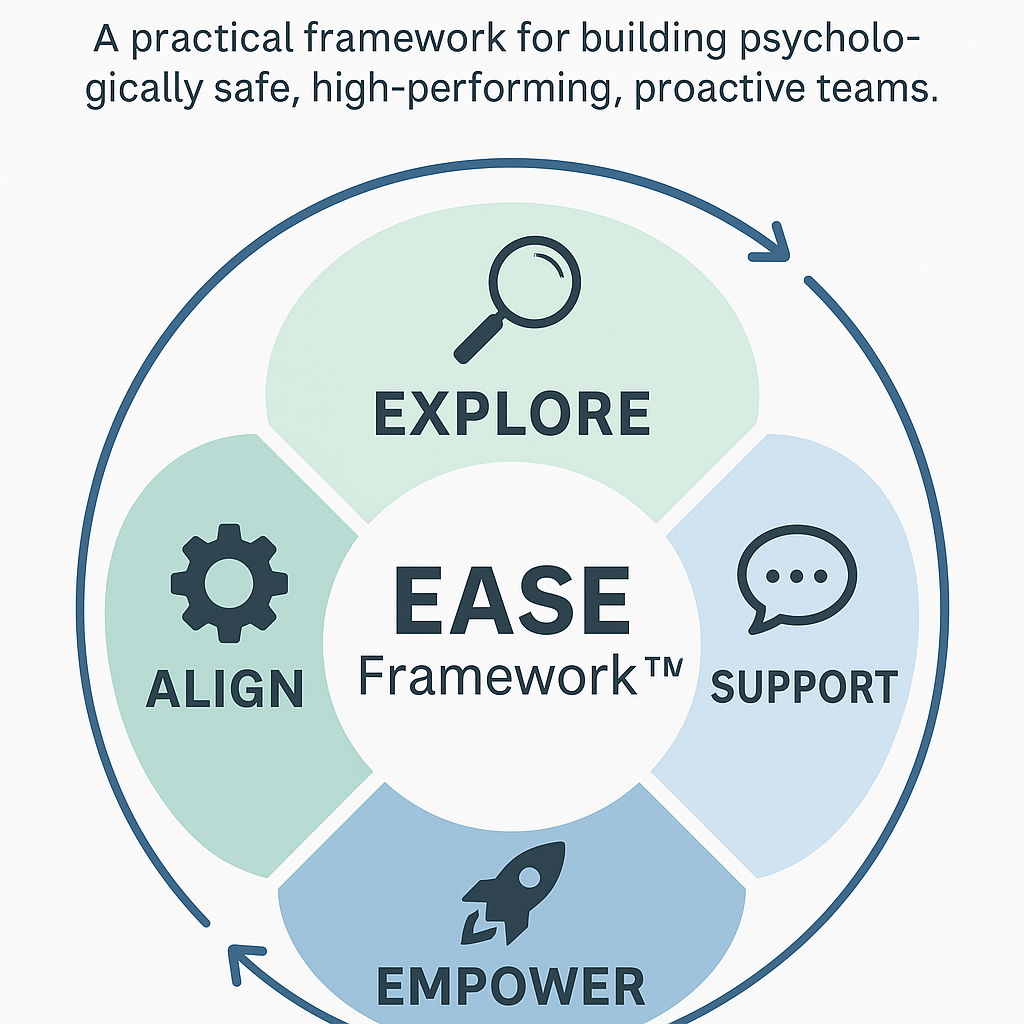
EASE describes the organisation’s journey. Explore reveals reality before solutions are imposed. Align turns purpose into shared priorities, roles, decision rights and language. Support creates the psychological safety, competence, resources and recovery capacity people need. Empower moves genuine authority to people with the information and capability to act.
Neither mnemonic is a rigid sequence. Leaders and teams move between the elements as circumstances change and new information appears.
Together, LEAD with EASE strengthens shared reality, explicit decision rights and delegated authority. The goal is not leadership without effort. It is to remove avoidable friction, repeated heroics and dependence on one founder or expert, so effort can be spent on judgement, creativity and care.
Read why I developed LEAD with EASE, including the ‘lazy manager’ idea behind it.
What does LEAD with EASE mean?
LEAD is the leader’s changing posture: Learn, Educate, Advise and Delegate. EASE is the organisation’s journey: Explore, Align, Support and Empower.
Who developed this model?
I developed this particular double mnemonic and its organisational-judgement application in April 2025, then first published it on 23 July 2025 through Course Correction Consulting.
Is it a step-by-step process?
No. The elements are a practical compass. Leaders and teams move between them as circumstances and information change.
Does “ease” mean leadership should be easy?
No. It means removing avoidable friction and dependency so effort is spent on judgement, creativity and care rather than repeated rescue work.
What problems does it address?
Misaligned priorities, founder bottlenecks, unclear decisions, weak handoffs, low psychological safety and teams that are busy without building capability.